Irish Wedding Trends 2026: What Vendors Are Seeing
If you’re researching Irish wedding trends 2026, here’s the truth: the trends that matter most aren’t looks. There are shifts in how weddings feel. how the day moves, how guests experience it, and how you’ll remember it when the weekend is over.
I’m Matthew Greer, the videographer behind Dear Oliver, and I get to see weddings from a perspective most trend pieces miss. I’m not planning the timeline or designing the florals. I’m filiming how everything collides in real time: people, energy, weather, music, light, nerves, relief, chaos, connection. That’s where the real trends show up first.
Below are the wedding trends in Ireland for 2026 that I’m hearing repeatedly from planners, venues, florists, and entertainment providers. and seeing play out across Irish and destination weddings. Each one comes with one clear takeaway: what it is, why it’s happening, and what it changes for your Irish wedding trends 2026 film.
Why wedding trends look different from behind the camera
Most trend content is written like a shopping list: colours, décor, tablescapes, outfits. That’s useful. but incomplete.
A videographer experiences a wedding as a sequence of shifts: anticipation → relief → energy → stillness → chaos → connection. The choices you make as a couple don’t just change how a room looks. They change how the story unfolds.
That’s why a trend like draping isn’t really about fabric. It’s about how light moves across a space. It’s about atmosphere. It’s about whether the room feels alive before anyone speaks.
And a trend like multi-day weddings isn’t really about adding events. It’s about giving the story time to develop so the film feels like a memory. no coverage.
Takeaway: The best wedding trends of 2026 are experience-led. They don’t add pressure. They add presence.
Experience-first weddings (presence over performance)
If I had to sum up the biggest shift in Irish wedding trends 2026, it’s this: the focus is moving toward experience.
Not experienced as in expensive. Experience as in:
How time is spent
How the atmosphere is shaped
How guests move through the day
How connected everyone feels. not just how everything photographs
I’m hearing versions of the same idea from different vendors: couples are designing weddings from the inside out, which means first. Presence first. Connection first. Style and tradition follow after that.
That shift is quietly powerful because it changes the day's emotional temperature. When couples stop trying to perform a wedding and start trying to live it, the entire room relaxes. Guests settle in faster. Conversations run deeper. Energy builds naturally instead of being forced.
From a film perspective, it’s night and day.
A wedding designed around experience gives me:
Better pacing (moments have space to land)
More natural emotion (less self-awareness, more real reaction)
More story (because the day isn’t just a sequence of events, it’s a flow)
Clear takeaway: In 2026, the trend isn’t a look. It’s a mindset. Weddings are being designed for presence, and the film becomes more honest because of it.
Multi-day celebrations (Ireland as a full weekend, not a single day)
Multi-day weddings aren’t new. But the way couples are using the weekend is evolving. In 2026, it’s less about stacking events and more about building chapters.
A welcome night where everyone actually connects before the ceremony. A day-two lunch that feels relaxed instead of obligatory. A venue experience that lets people breathe. Couples are choosing to give the story time.
This is especially true for destination weddings. When guests travel from the US (or anywhere outside Ireland), the wedding is rarely just one day. It’s a gathering. A temporary world. People arrive with effort and intention. And couples are honouring that by making the weekend feel like something, not just a schedule.
From a videographer’s perspective, multi-day celebrations create what most films are missing: CONTEXT.
A single-day wedding can be incredible, but a weekend gives you:
More relationships on screen (people have already warmed up)
More personality (the couple is more relaxed by day two)
A stronger emotional arc (build-up → peak → exhale)
The kind of small moments that become the heart of the film later
If you’re planning a destination wedding in Ireland, you don’t need a packed itinerary to get a weekend feel. One welcome moment and one relaxed follow-up moment are often enough. The goal is not more content. It’s more connected.
Clear takeaway: Multi-day weddings are trending because they feel better to live. The film benefits because the story has time to deepen.
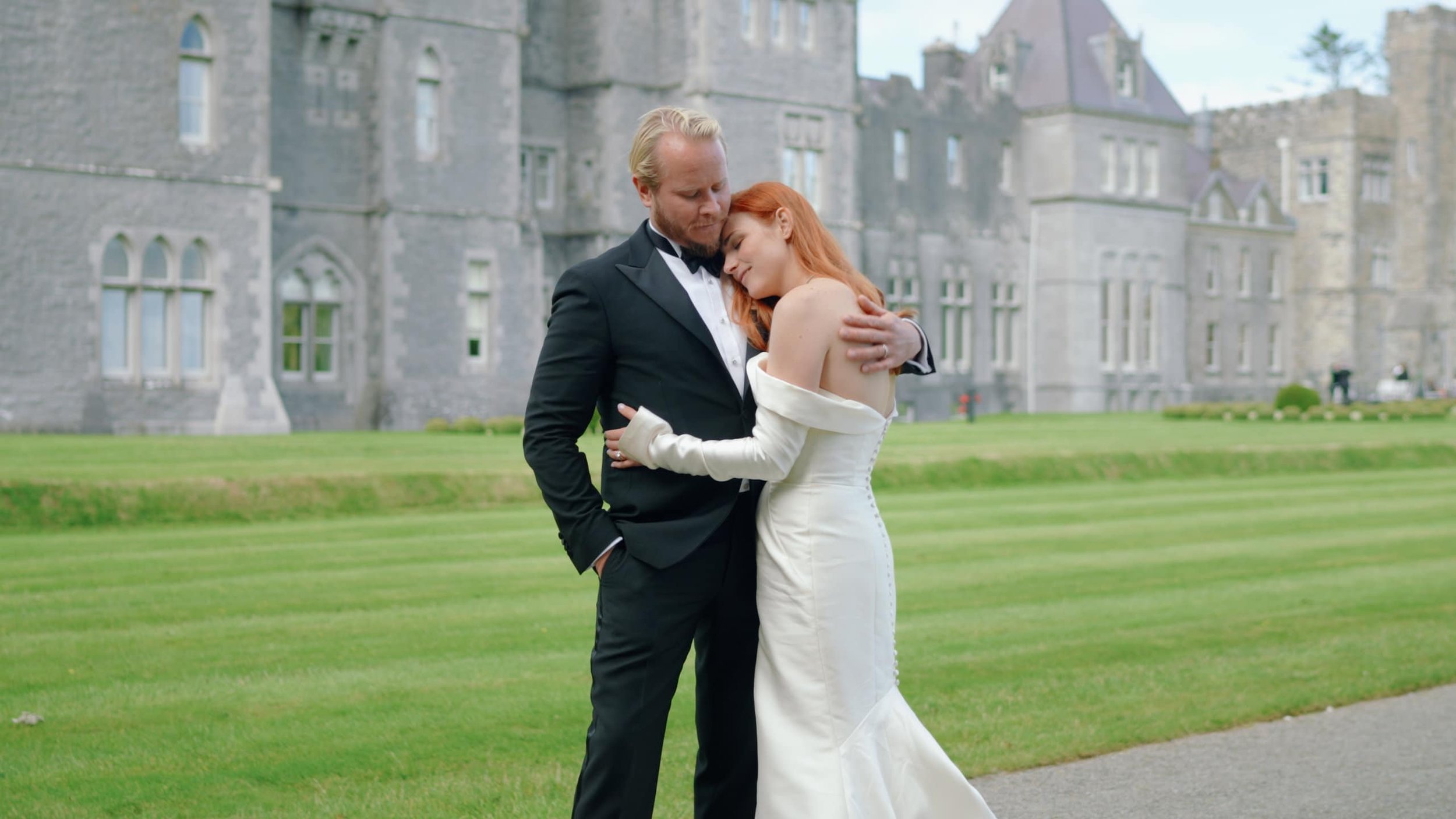
Lo‑fi honesty layered into luxury (iPhone/camcorder energy is back)
One of the most interesting wedding videography trends 2026 is the return of something slightly imperfect on purpose.
Couples are craving authenticity. but not in a lower the standard way. In a show me what it actually felt like way.
That’s where lo‑fi capture comes in: iPhone moments, camcorder texture, quick handheld clips, unfiltered laughter, casual chaos. Not to replace cinematic coverage. but to sit alongside it as a second layer of truth.
The reason this works is simple: lo‑fi visuals feel like memory. They feel like something your friends would have captured, not something you created. And when that energy is paired with refined filmmaking, you get a film that feels both elevated and real.
In practical terms, I’m seeing couples care less about hero shots and more about:
What they sounded like (real audio, not just music)
How the room felt when the speeches landed
The in-between conversations
The kind of joy that doesn’t need direction
This is also part of a wider 2026 shift: authenticity over tradition. Couples are keeping what matters to them, ditching what feels arbitrary, and letting the day reflect who they actually are.
Clear takeaway: Lo‑fi isn’t a downgrade. It’s a texture choice. In 2026, the most modern films feel honest first and cinematic second.
Texture and bold design (draping takes the lead)
Design trends come and go, but now and then something changes the way a space behaves.
In 2026, that something is texture. and draping in particular. Not as decoration. As architecture.
Intentional draping shapes light, softens rooms, adds movement, and creates depth in a way that florals alone often can’t. It turns a venue from nice into atmosphere. It makes a space feel immersive. like you’ve stepped into a scene.
Alongside that, I’m seeing more confidence in bold, monochromatic palettes and sculptural choices:
Strong single-colour stories
Texture-forward table styling
Interesting table shapes and layouts
Design choices that create an environment, not just a setup
Here’s why this matters beyond aesthetics: texture reads on film.
Fabric catches movement. Candlelight plays across surfaces. Shadows feel intentional. The room has dimensions. And when a space has depth, the footage looks richer without needing to force it.
But the best version of this trend isn’t about doing draping because it’s in. It’s about using texture to support a feeling: intimacy, warmth, drama, softness, energy.
Clear takeaway: The 2026 design trend isn’t more. Its depth. Texture-driven spaces don’t just look good. They change the mood of the entire day.
Entertainment as emotional pacing (music, production, timing as one system)
A wedding doesn’t need constant big moments. It needs rhythm.
One of the most practical wedding video trends in Ireland in 2026 is couples thinking more intentionally about how the day builds, especially around music and entertainment.
When music, production, and timing are managed as one system, the atmosphere doesn’t just spike and crash. It carries.
That looks like:
Ceremony music that actually matches the emotional tone (not just tradition)
A smart transition into dinner so energy doesn’t fall off a cliff
Speeches timed in a way that holds attention (and doesn’t drain the room)
A deliberate lift into the dancefloor. not an awkward reset
Entertainment that supports the mood instead of hijacking it
This trend is partly driven by guest experience. Couples want celebrations that feel immersive, not stop-start. But it also reflects something deeper: people are tired of performative weddings. They want the energy to feel natural and earned.
From a film perspective, entertainment as pacing is massive. It affects:
How speeches land emotionally
Whether the dancefloor feels electric or forced
Whether the night feels like a story or a montage
Clear takeaway: In 2026, entertainment isn’t just a booking. It’s the emotional engine of the day. When the pacing works, the film feels alive.
What these trends mean for your wedding film (the practical part)
If you’re reading this with close-to-booking intent, here’s the most useful sentence I can give you:
The best wedding films in 2026 are built on presence. not performance.
These trends all point to the same outcome: weddings designed around feeling create films that feel like memory. And that’s the goal. Not a highlight reel of things that happened, but a record of what it was to be there.
Here are three simple ways to lean into these trends without turning your wedding into a project:
Protect time for connection.
The most valuable footage isn’t created by adding things. It’s created by giving moments room to happen.
Choose vendors who understand flow.
A good team doesn’t just execute. They shape the rhythm of the day so you can stay inside it.
Build one or two chapter moments.
A welcome drink, a room reveal, a quiet walk, a day-two lunch. You don’t need more content. You need anchors.
Clear takeaway: A film becomes powerful when the day is designed to be lived, not performed.
If you’re planning from the US: what to know about Irish weddings in 2026
If you’re researching Ireland from across the Atlantic, you’re probably balancing two things at once: the romance of the place, and the reality of logistics.
Here’s what I see consistently with US destination couples: the weddings that feel best are the ones that let Ireland do what it naturally does. atmosphere, intimacy, energy, unpredictability. without trying to control it into something else.
A few grounded notes that help:
Build weather flexibility into the plan, not as a backup, but as a feature. Some of the best moments happen when the day adapts.
Don’t overpack the timeline. Ireland rewards space. When there’s breathing room, everything feels less like production and more like celebration.
Let the weekend be the story. Even if you only do two events (welcome + wedding day), it changes how connected everyone feels.
And if you’re wondering whether a film matters more for destination couples. In my experience, yes. Because a destination wedding moves fast, you’re hosting, travelling, absorbing, and trying to be everywhere at once. Film becomes the thing that gives it back to you later, properly.
Clear takeaway: The best destination weddings in Ireland don’t try to out-design the place. They let the place shape the experience.
FAQ: Irish Wedding Trends 2026 (quick answers)
What are the biggest Irish wedding trends for 2026?
The biggest Irish wedding trends for 2026 are experience-first celebrations, multi-day wedding weekends, texture-led design (especially intentional draping), and a stronger preference for presence over performance. Couples are prioritising atmosphere, flow, and guest connection, which changes both how the day feels and how it’s remembered.
Are wedding trends in Ireland different from those in the US in 2026?
Wedding trends in Ireland and the US overlap in the move toward authenticity and guest experience, but Ireland tends to lean more naturally into atmosphere and flow. Irish venues, light, weather, and weekend-style celebrations shape the experience in ways that often feel more immersive and less performative.
What wedding videography trends are popular in 2026?
Wedding videography trends in 2026 focus on natural pacing, real audio, and films that feel honest rather than overly produced. A major shift is lo‑fi texture layered into refined filmmaking—iPhone or camcorder-style moments used intentionally alongside cinematic footage to make the film feel more like a memory.
How do I choose which trends to follow for my wedding?
Choose trends that improve how the day feels to live, not just how it looks online. A good filter is: will this reduce pressure and increase connection? If a trend creates presence, atmosphere, or ease, it’s worth considering; if it creates performance or stress, it’s probably not for you.
What trends actually make a wedding film better?
The trends that most improve a wedding film in 2026 are the ones that improve real-life flow and emotion: experience-first planning, multi-day celebrations, entertainment that builds momentum, and design that creates depth and atmosphere. When the day has space to breathe, the film becomes more natural, more personal, and more rewatchable.
Work with Dear Oliver
I’m Matthew Greer, founder of Dear Oliver, and I’ve filmed 150+ weddings across Ireland and Europe. When I talk about the Irish Wedding Trends 2026 couples should actually care about, I’m not guessing. I’m describing what I’m seeing repeatedly from behind the camera, and what planners, venues, florists, and bands are telling me is changing on the ground.
If you want a wedding film that feels modern, honest, and full of atmosphere. not staged, not performative. You can enquire with us here: